I would say that 2015 is symbolic for BD students as they had the privilege to meet Maruti Chauhan who had started to come to our school through the Oscar Foundation. At the time, Maruti was an Oscar Young Leader who wasn’t well-versed in English but at his time in B.D. Somani was able to interact with students and improve his language skills, and gradually gained more confidence in speaking English. After this, through the Oscar Foundation Maruti was given the opportunity to train with professional football players in England and become a coach. Once he returned he was inspired to do the same for others in his community. After watching the struggles his mother and aunts faced, he wanted to use his privilege to give back to his community and started a small tailoring organization to provide the women in fishing communities with a steady stream of income.
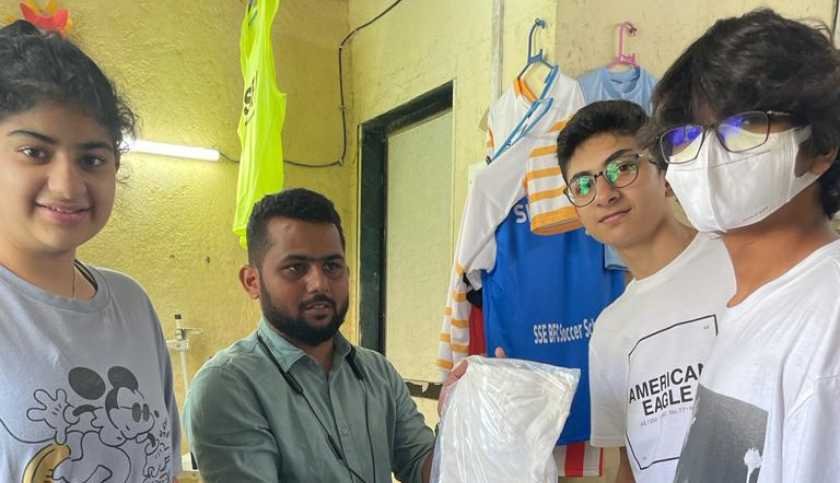
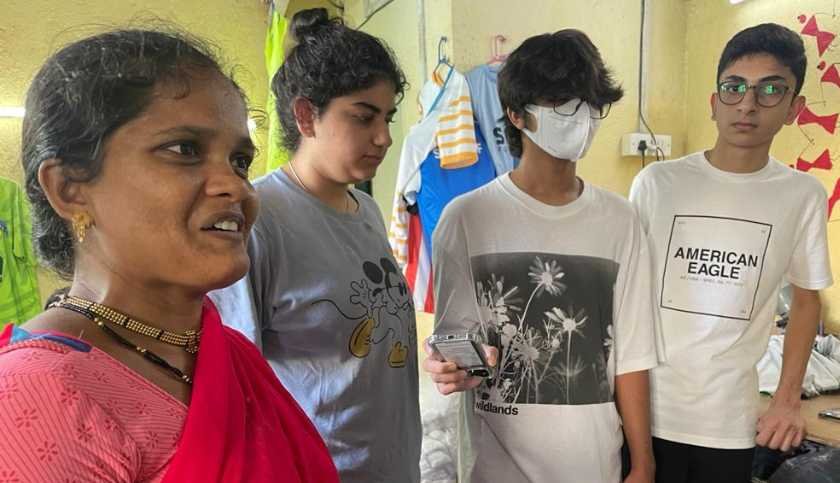
This tailoring organization was later named, Hamari Silai and it provides low-income women with day jobs. At Hamari Silai, we interacted with one such woman named, Manisha Rathod who has been working at Hamari Silai for over three years. She got married at the age of nineteen and had two children at the age of twenty-one. She then was in charge of the household and took care of her children until she got this opportunity to learn a new skill and be a breadwinner in her household. While working at Hamari Silai, she has learned how to use an ATM and make money transfers and has also stitched clothes for United Kingdom-based football organizations.
She gets to work every day to stitch new clothes and meet client orders that Maruti receives.
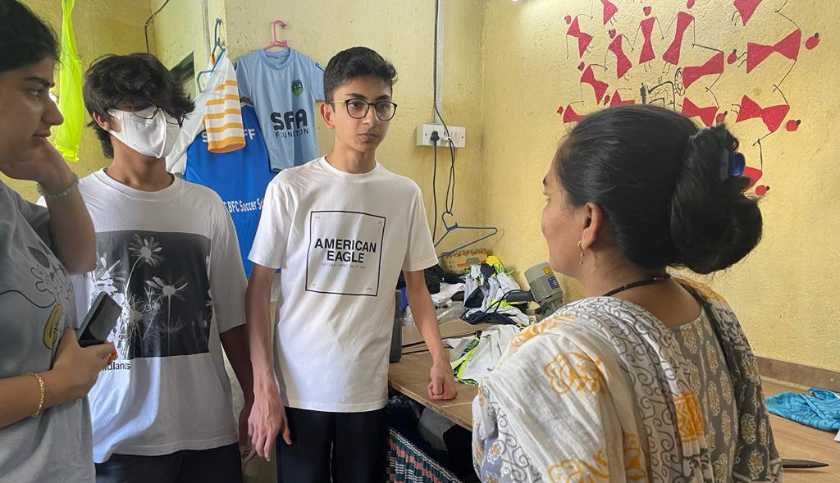
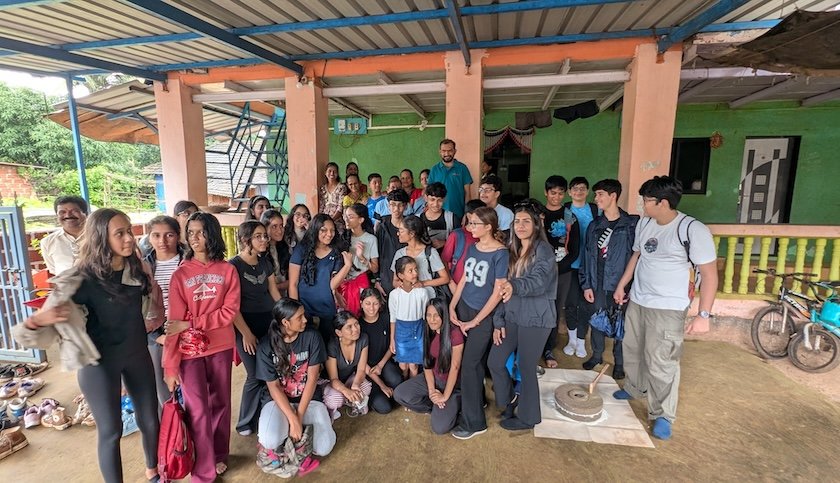
While we visited Hamari Silai, we were truly inspired by the work ethic of these women and were grateful for the opportunities that our parents had provided us with throughout the years.
This circle of infinite giving has enriched the lives of multiple women and allowed them to have an identity for themselves. They are no longer confined to the expectations of society and what was expected of them. With the help of Maruti, they have gained greater chances and opportunities for not only improving their lives but the lives of their children and generations to come.
This post has been authored by Jahnvi Sampat,Shanay Tolat and Jayesh Patil